
🟧 Orange Card
“The new middle ground”
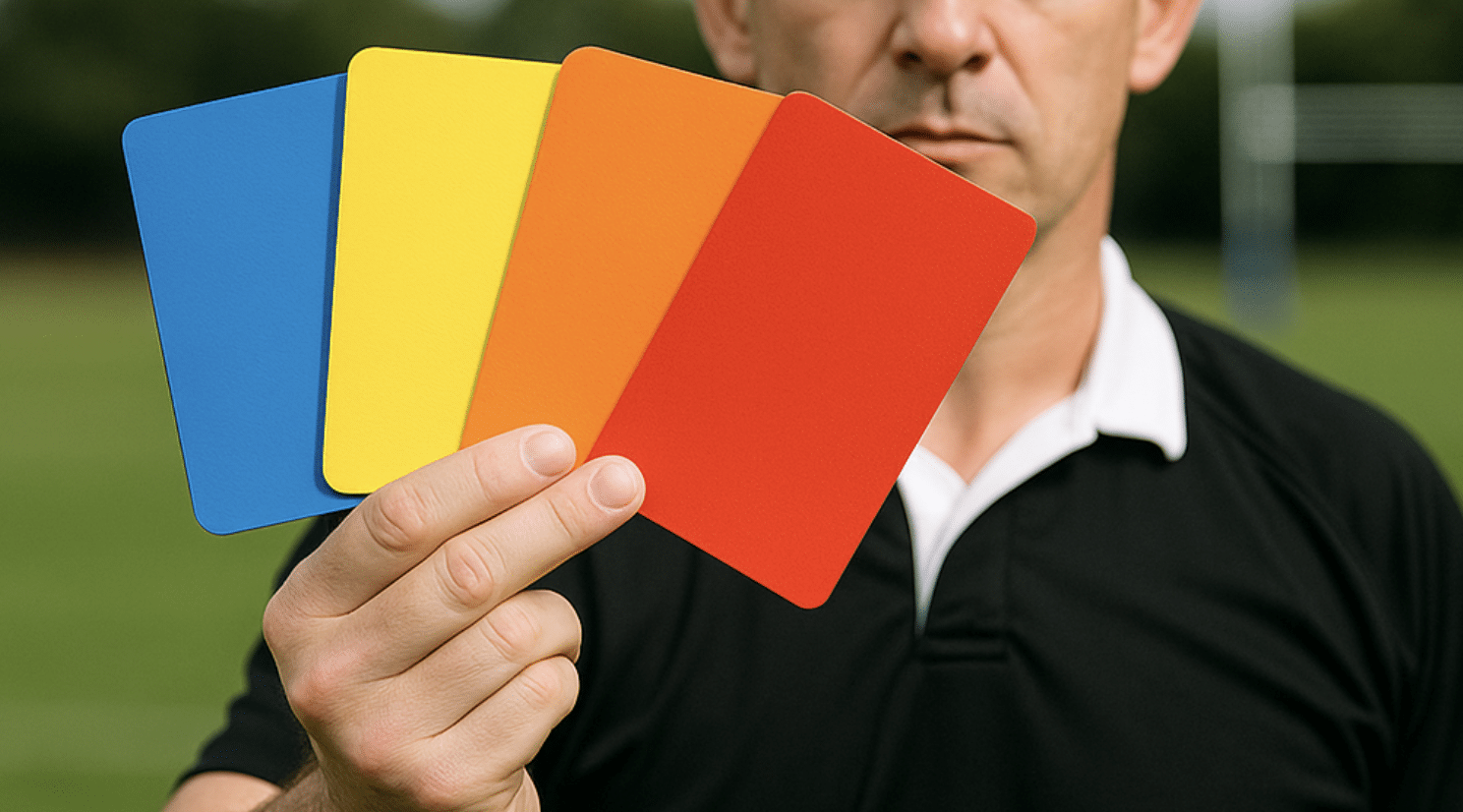
The orange card is the newest and most experimental concept in rugby’s card system. It’s designed to fill the gap between yellow and red — for offences that are more serious than a yellow but not quite clear-cut red territory.
[ad_connatix]
When a referee shows an orange card, the player is temporarily sent off for around 15–20 minutes. After that time, the team can bring on a replacement, but the original offending player cannot return.
The orange card gives referees flexibility in borderline situations — such as accidental high contact or reckless but not malicious challenges — where a full red might feel too harsh but a yellow not strong enough.
Currently, the orange card is being trialled in competitions like France’s Top 14 and Pro D2, and could become part of the global game in the future.
⚖️ Summary: What Each Card Means
| Card | Colour | Purpose | Outcome |
|---|---|---|---|
| Blue | 🟦 | Player welfare – suspected concussion | Player removed, cannot return; medical assessment required |
| Yellow | 🟨 | Moderate offence or repeated infringements | 10-minute sin bin |
| Orange | 🟧 | Between yellow and red – experimental | 15–20 min exclusion; replacement allowed after |
| Red | 🟥 | Serious foul play or misconduct | Player sent off for rest of match; possible ban |
Final Thoughts
The introduction of blue and orange cards shows how rugby is evolving. The game is becoming more mindful of player safety, head injury protocols, and fair competition.
From the sin bin to full send-offs, and now welfare-based removals, the four-card system gives referees the tools they need to protect players and maintain the integrity of the sport.
Rugby’s message is clear: play hard, play fair, and play safe.